
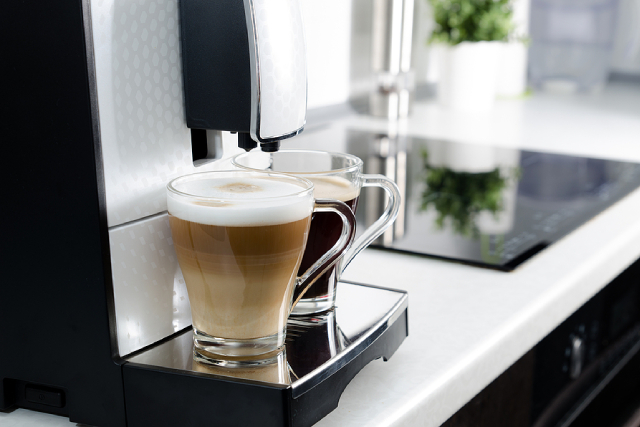
There is a reason your coffee tastes different depending on where you make it. The beans, the grind, and the brew method all matter, of course. But the one ingredient that most people overlook is the one they use the most: water. If your morning cup has been tasting flat, bitter, or just slightly off despite using good coffee, your tap water may be the culprit.
Singapore’s tap water is safe to drink and meets strict standards set by PUB, Singapore’s National Water Agency. However, safe does not always mean flavourless. Chlorine and chloramine are added during the treatment process to keep water free from harmful bacteria. This is a necessary step, but one that can leave a faint chemical taste and odour that interferes with the more delicate flavour notes in your coffee.
What chlorine does to your coffee
Coffee is about 98% water. That single fact explains why water quality has such a disproportionate impact on how your cup turns out. When chlorine is present in the water you use to brew, it does not simply disappear during the process. It reacts with compounds in the coffee grounds, dulling the brightness of lighter roasts and adding an unwanted edge to darker ones.
Specialty coffee roasters and baristas have long understood this. Many cafés in Singapore and around the world use filtered water as a standard part of their setup, not as a premium add-on. The difference is not subtle once you know what to look for: filtered water tends to produce a cleaner, more rounded cup with better clarity of flavour.
Beyond chlorine, other dissolved minerals and impurities in tap water can affect extraction, the process by which hot water draws flavour compounds from the coffee grounds. Water that is too hard or too soft extracts differently, often resulting in coffee that tastes either harsh and over-extracted or weak and underwhelming.
The role of filtration
A good filtration system removes or reduces chlorine, sediment, and other compounds that interfere with taste, leaving water that is clean and neutral enough to let the coffee speak for itself. Activated carbon filters are particularly effective at absorbing chlorine and improving odour, which is why they are a common feature in countertop and under-sink filtration units.
This is also where an office water dispenser earns its place. For many people, the first coffee of the day happens at work, and if the water going into that coffee is unfiltered tap water, the result is predictably mediocre. A filtered dispenser at the office not only improves hydration throughout the day but quietly upgrades the quality of every hot drink made with it, making the office feel a little more like home for anyone who takes their morning brew seriously.
Temperature matters too
Water temperature is another variable that filtration-focused coffee drinkers often consider alongside water quality. The ideal brewing temperature for most coffee methods sits between 90°C and 96°C, which is hot enough to extract fully, but not so hot that it scorches the grounds and introduces bitterness.
Boiling water straight from a kettle and pouring it immediately over your coffee is a common mistake. Filtered water dispensers that allow you to set a specific output temperature take the guesswork out of this, giving you consistently good conditions for brewing without needing to monitor a thermometer.
Different brew methods, same principle
Whether you prefer a French press, a pour-over, a stovetop moka pot, or a capsule machine, the water quality principle applies equally across all of them. Some methods are more sensitive than others (pour-over and filter coffee tend to highlight water quality most clearly because the process is slower and more precise), but no brew method is truly immune to the effects of chlorinated or heavily mineralised water.
If you have ever brewed the same beans at home and at a café and wondered why the café version tasted better, water quality is often a significant part of the answer. It is not just the equipment or the barista’s technique; it is the water they start with.
Getting the mineral balance right
Not all minerals in water are bad for coffee. Magnesium, for instance, enhances the extraction of flavour compounds and is associated with brighter, more complex-tasting coffee. Calcium contributes to body and mouthfeel. The issue arises when total dissolved solids are too high, which leads to over-mineralised water that tastes hard and interferes with extraction, or too low, which produces flat, lifeless coffee.
A total dissolved solids range of around 75 to 250 mg/L for brewing water, with a target of approximately 150 mg/L, is an ideal midpoint. Good filtration systems strike a balance by removing excess impurities and chlorine without stripping the water entirely of its natural mineral content, which would leave you with water that is technically pure but not ideal for brewing.
Small changes, noticeable results
One of the more satisfying things about improving your water quality is how immediately apparent the results are. You do not need to change your beans, your grinder, or your brewing technique to notice a difference. Simply switching to filtered water can transform a cup that has been underwhelming into one that actually delivers on the promise of good coffee.
For households and offices that go through a reasonable volume of hot drinks each day, the ongoing cost of filtered water is modest relative to the improvement in quality. It is also a change that benefits everyone who drinks from that water source, not just the coffee drinker.
Conclusion
If you are ready to taste the difference that clean, filtered water makes, Watermaxx has a range of dispensers suited to both home kitchens and office pantries. Our filtration systems are designed to deliver water that is free from chlorine and unwanted odours, at the temperature you need, whenever you need it. Whether you are pulling your first espresso of the morning or making a round of teas for the team, better water is the foundation. Visit Watermaxx to explore our full range and find the right solution for your space.