
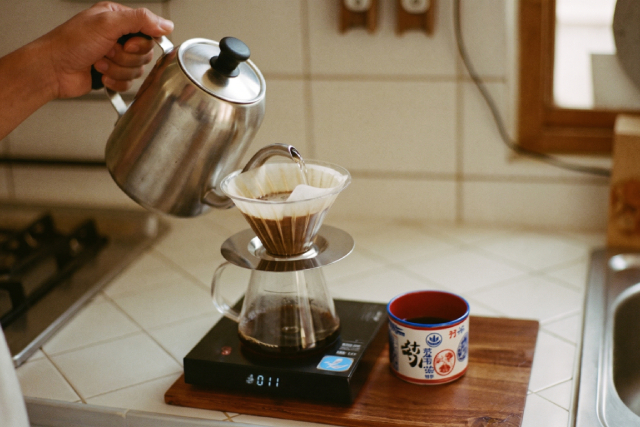
Quarter to seven in the morning, the kettle is roaring, and you are pouring boiling water straight over a teabag while still half asleep. Perfectly ordinary. Also the reason your tea tastes sharper and more bitter than the same brand did at your aunt’s place last Sunday.
Heat does more to a drink than most of us give it credit for. The same leaves, the same grounds and the same sachet will taste noticeably different depending on how hot the water was when it landed on them. A hot and cold water dispenser for home makes that easy to control, though the principle holds whichever way you heat your water.
Does water temperature really change how a drink tastes?
Yes, and more than you would expect. Heat controls how quickly flavour compounds dissolve out of leaves and grounds, so water that is too hot drags bitter tannins into the cup alongside the good stuff, while water that is too cool leaves the sweeter compounds behind and gives you something thin and sour. Everything below is a variation on that single idea.
How hot should water be for brewing coffee?
Between roughly 90 and 96°C. The National Coffee Association recommends brewing at 195 to 205°F for proper extraction, and the specialty coffee world has settled on much the same window after decades of tasting panels.
Step outside it and you can taste the difference. Cooler water under-extracts, which is why a weak pour-over often tastes sour and papery instead of simply weak. Hotter water pulls out the harsh, ashy notes that people usually blame on the beans. Lighter roasts are denser and cope well at the top of the range, while darker roasts extract easily and do better slightly cooler.
The practical problem is that a kettle only knows one temperature. Water leaves a rolling boil at 100°C, so the usual workaround is to boil it and then stand there for 30 to 45 seconds while it drops into range. Fine once. Tedious every morning before work.
Why your green tea keeps turning out bitter
Your green tea keeps turning out bitter because it is being scalded. The UK Tea and Infusions Association puts black tea at 90 to 98°C and green tea at around 80, and that 20°C gap is the whole difference between a sweet, grassy cup and one that tastes like it has been stewed.
White teas are gentler still and prefer water in the mid seventies. Lighter oolongs sit somewhere in the eighties, darker roasted ones closer to black tea. Herbal and fruit infusions are the exception at the other end, since they are not tea leaves at all and generally need freshly boiled water to release anything at all.
| What you are making | Water temperature |
| White tea | 70 to 80°C |
| Green tea | Around 80°C |
| Light oolong | 80 to 90°C |
| Pour-over and drip coffee | 90 to 96°C |
| Black tea | 90 to 98°C |
| Herbal and fruit infusions | Freshly boiled |
What about kopi, three-in-one and instant noodles?
These are the forgiving end of the spectrum, and they all want heat. Sock-brewed kopi uses robusta beans roasted dark with sugar and margarine, which stands up to near-boiling water without complaint. Three-in-one sachets need genuine heat to dissolve the creamer properly, and anyone who has poured lukewarm water onto one has seen the clumps that follow. Instant noodles are the fussiest of the lot, not because the noodles are delicate but because the dried block absorbs heat fast, so water that starts below boiling never quite finishes the job and you end up with chewy edges.
Does the water itself change the taste?
A little, and it is a question of preference rather than safety. Singapore’s tap water is suitable for drinking straight from the tap and meets World Health Organisation guidelines, which PUB backs with continuous monitoring across the network. What some people do notice is chlorine, used to keep the supply safe on its long journey through the pipes to your kitchen. It has a distinct smell and a faint taste, and both carry into a delicate green tea or a light roast far more obviously than into a cup of kopi.
Filtration is what softens that. Our dispensers run a sediment filter to catch particulates, pre and post carbon filters that adsorb chlorine and organic compounds, and a 0.1 micron UF membrane filter. The carbon stage is the one brewers notice, since removing chlorine takes the edge off the aroma and lets the tea or coffee come through more cleanly.
Getting the temperature right without babysitting a kettle
Holding water at a set temperature is the entire point of a dispenser, and 93 to 96°C happens to be where most of them sit. That range lands squarely inside the coffee window and just above the mark for black tea, which is one of the quieter reasons why you need a water dispenser once you start paying attention to what you drink.
Green tea still needs a moment of patience, since even 93°C will scorch it. Pour into your cup, wait a minute, then add the leaves. The same logic applies in the pantry at work, where an office water cooler saves everyone the queue at the kettle and gives the afternoon teh drinkers a fighting chance.
One thing to sort out at home if you have young children around is the hot tap safety lock. Hot liquids are a common cause of scalds in children, and a lock takes a second to engage.
A small change to your morning
None of this asks you to buy a thermometer or weigh out your beans. Knowing that green tea wants a pause and coffee wants water just off the boil is enough to improve most cups in your week, starting tomorrow morning.
If you would like a hand working out which unit suits your kitchen or your office pantry, we are happy to come down and take a look. Get in touch with Watermaxx for a free, no-obligation site visit and quote, and we will talk you through what fits your space and how you actually drink.