
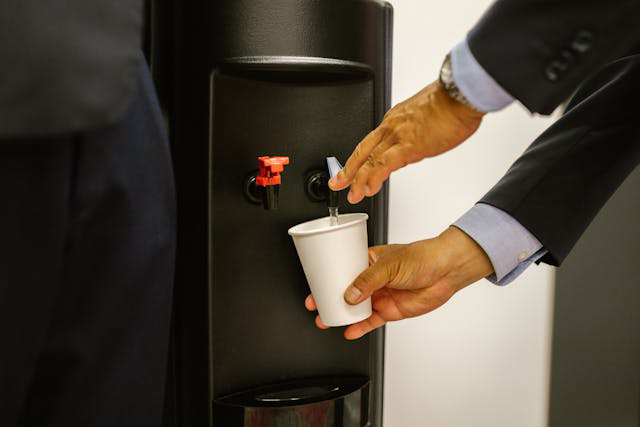
Water dispensers come in many ways, shapes, and forms, and if you’ve been browsing long enough, everything starts to look the same. Hot and cold options, standing units, tabletop versions, sleek minimalist designs, touch panels, child locks, and more. It can feel like you’re buying a gadget when really, you’re just trying to make drinking water easier at home.
But when you zoom out, most homeowners end up facing one key decision: tank or tankless. Tankless sounds modern (and it does look impressive), but newer doesn’t always mean better for you. The right pick depends on your habits, your household size, and even how your home runs day-to-day.
First, what’s the actual difference?
1. A tank water dispenser (storage-type)
A tank model stores water inside an internal reservoir. It keeps the water hot and/or cold by maintaining that temperature in the tank.
In simple terms:
- It cools and heats water, then stores it.
- When you dispense, it gives you water immediately.
- It “maintains” temperature even when you’re not using it.
2. A tankless water dispenser (instant-type)
Tankless models don’t store large amounts of water. They heat water on demand (and often cool it through a fast chilling system) when you press the button.
In simple terms:
- It prepares water only when needed.
- It’s designed for efficiency, hygiene, and precision temperature control.
- It often comes with more settings and safety features.
Which feels better to use daily?
If you want fast and simple: tank models.
Tank dispensers tend to feel straightforward. Press hot, press cold, and water comes out. For families that prioritise convenience and speed, tank systems can be satisfying to use.
Best for:
- Households that frequently fill bottles and cups
- Busy mornings when everyone wants water quickly
- People who don’t want to wait for heating
If you want control and modern convenience: tankless models.
Tankless dispensers often come with exact temperature options, cup-size presets, and multi-step safety locks. It feels more like a smart appliance than a water cooler.
Best for:
- Parents making baby formula (with exact temp needs)
- People who drink warm water or tea often
- Households that want premium features and control
Cost comparison
1. Upfront cost
Generally speaking:
- Tank models usually cost less upfront.
- Tankless models tend to cost more due to the instant-heating/chilling system and extra features.
If you’re in the middle of renovation spending, a tank model may feel like the more budget-friendly choice right away.
2. Maintenance costs
Here’s where it gets interesting, because long-term costs can flip the story.
Tank models have simpler parts, but more internal cleaning needs. They involve a water reservoir, which means that over time, mineral deposits can build up, taste can change slightly, and cleaning must be done properly to keep hygiene high.
Tankless models have more advanced systems, but often cleaner water flow. Tankless systems generally have fewer sitting water areas, more direct delivery, and better internal filtration setups (depending on model).
That said, tankless models can involve more expensive replacement parts and servicing that requires a specialist.
So, what’s cheaper long-term?
If you’re consistent with cleaning and basic maintenance, tank systems can stay affordable. If you prefer low-effort hygiene, tankless systems often feel worth it over time.
Power consumption: Which one uses more electricity?
This is one of the biggest deciding factors, especially for cost-conscious homeowners.
Tank models keep water hot/cold, which means energy is used continuously to maintain temperature, and power usage can be more constant across the day. Even if no one is drinking water at night, the system may still be working to keep water heated and chilled.
On the other hand, tankless units use power when you dispense, which means heating happens instantly, chilling happens quickly, and then it stops once the job is done (depending on design). This can feel more efficient, but in heavy-use households, repeated heating cycles may add up.
Practical takeaway: If your household drinks frequently throughout the day, both types can be comparable. If you drink in bursts (morning + night), tankless tends to feel more power-smart. If you’re trying to minimise electricity waste, tankless often wins in perception and design.
Hygiene and taste: Which option gives cleaner water?
1. Tank models
Pros:
- stable temperatures
- instant dispensing
Cons:
- tank cleaning matters a lot
- can be more prone to water taste changes if maintenance is delayed
2. Tankless models
Pros:
- less stored water
- typically feels fresher
- often paired with multi-stage filters and modern hygiene features
Cons:
- still needs servicing
- filters still need replacing, even if the unit feels “cleaner”
If hygiene is your biggest concern, tankless generally gives more peace of mind. But it doesn’t replace good habits, just makes them easier to keep up.
Lifestyle fit: What suits your home best?
Choose a tank model if:
- You want a more affordable option upfront
- You need instant hot/cold without waiting
- Your household drinks a lot (water doesn’t “sit” long anyway)
- You don’t mind scheduled cleaning and maintenance
Choose a tankless model if:
- You want modern convenience and temperature precision
- You’re sensitive to hygiene concerns and water taste
- You like set-and-forget systems with smarter features
- You’re willing to invest more upfront for comfort long-term
A quick household reality check before you buy
Ask yourself:
- How many people live in the home?
- How often do we fill bottles?
- Will we realistically clean the unit regularly?
- Do we care about exact temperatures for tea, coffee, or formula?
- Do we prefer lower upfront cost or long-term convenience?
Because the truth is: the best dispenser is the one you’ll actually use. Especially when you’re trying to drink water daily in Singapore’s humid climate, it helps to have a setup that matches your habits, not one that forces you into new routines.
If you want something that feels effortless and modern, tankless can feel like an upgrade. If you want something simple, reliable, and budget-friendly, tank models are still a solid choice.
Also, don’t overlook what you’re really searching for: a water dispenser for home that fits your lifestyle, not just something that looks good in the kitchen.
Conclusion
Tankless dispensers are popular for a reason. They’re sleek, feature-rich, and often feel cleaner and smarter. But tank dispensers aren’t outdated, they’re simply built for a different kind of household. If you use your dispenser regularly and maintain it properly, a tank model can still be cost-effective, safe, and highly convenient.
If you’re still unsure which option suits your renovation budget, household needs, and daily habits, Watermaxx can help. From modern tankless solutions to reliable water dispensing systems for everyday homes, Watermaxx offers options designed for comfort, hygiene, and long-term value.